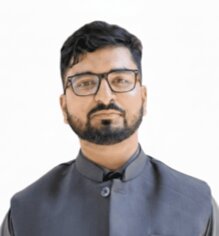
Sajjadur Rahman
MSc Researcher · Academic Editor · Freelance Consultant · Dhaka, Bangladesh
Contact & Links
Soil Scientist.
Academic Editor.
I am an MSc researcher in the Department of Soil, Water and Environment at the University of Dhaka, where I am investigating bentonite-biochar coated urea (BBCU) as a climate-smart slow-release fertilizer for improved nitrogen use efficiency in South Asian rice and vegetable systems. I hold a BSc from the same department with a CGPA of 3.60/4.00, and I am a recipient of the National Science and Technology Fellowship from Bangladesh's Ministry of Science and Technology.
Alongside my thesis work, I hold active research affiliations at the Bangladesh Council of Scientific and Industrial Research (BCSIR), where I study size-resolved particulate matter and its heavy-metal content, and at the Dhaka University Nanotechnology Centre (DUNTC), where I completed a nano-fertilizer experiment on wheat. I also developed SPADE — an open-source Python/Streamlit platform for standardised nitrogen use efficiency statistical analysis.
My independent work includes a district-level study of environmental governance failure in Bangladesh, presented at ICJR-II and submitted to Global Environmental Change, and a field assessment of legacy lead contamination at a decommissioned battery recycling site in Fulbaria, Narsingdi.
As a freelance professional, I work with MSc and PhD students to improve their manuscript structure, language, and journal formatting; analyse research datasets; and guide thesis writing from proposal to final chapter. I bring both technical depth and genuine enthusiasm to every project I take on.
Education
— ❧ —Master of Science — Soil Science
University of DhakaThesis: Optimizing Nitrogen Efficiency Using Bentonite–Biochar–Coated Urea (BBCU) in Rice and Eggplant Systems. Designing CRD-based pot and field experiments with 8 treatments × 3 replications, quantifying four NUE indices, and developing field-scalable fertilizer management strategies.
Bachelor of Science — Soil, Water & Environment
University of DhakaUndergraduate training in soil physics, pedology, soil chemistry, hydrology, GIS & remote sensing, plant nutrition, agronomy, and climate change mitigation. Seminar paper on IoT in Agriculture 5.0.
Research Roles
— ❧ —- Designing CRD-based pot and field experiments (8 treatments × 3 replications) evaluating BBCU as a climate-smart slow-release fertilizer for South Asian rice–vegetable systems.
- Quantifying four NUE indices: Agronomic Efficiency (AE), Recovery Efficiency (RE), Physiological Efficiency (PE), and Nitrogen Harvest Index (NHI).
- Post-harvest soil analysis: residual NH₄⁺/NO₃⁻ via KCl extraction, available nutrients, Walkley-Black OC, pH, and EC.
- Modelling N release from BBCU with zero-order, first-order, Higuchi and Korsmeyer–Peppas kinetics.
- Developing field-scalable, climate-smart fertilizer management strategies for Bangladesh's rice–vegetable agroecological conditions.
- Awarded National Science and Technology Fellowship (Ministry of Science and Technology) for this research.
- Conducted a CRD pot experiment (8 treatments × 3 replications, 24 pots) comparing nano-urea versus conventional urea on wheat growth and soil health.
- After hail damage, redirected focus to plant tissue nutrient quality (Kjeldahl N, protein estimation at N% × 5.7, P/K/S/Ca/B via AAS and ICP-OES) and NUE indices.
- Post-harvest soil dynamics: residual mineral N, available nutrients, pH, EC, and Walkley-Black organic carbon to assess fertilizer carry-over effects.
- Developed SPADE — an open-source Python/Streamlit application for integrated NUE computation, factorial ANOVA with Tukey HSD, outlier detection, and publication-ready figure export. Manuscript in preparation.
- Managed a master sample log covering the 24-pot tissue and soil datasets; prepared the project completion report for DUNTC.
- Size-resolved particulate matter sampling (PM₀.₁, PM₁, PM₂.₅) at three contrasting sites in the Dhaka region, including Dholaikhal and Savar, using Nanosampler II (Model 3182, Kanomax, Japan).
- Developed filter digestion SOPs (EN 14902:2005 microwave acid digestion, HNO₃ + H₂O₂) for glass-fibre/PTFE filters, with QA/QC via NIST SRM 1648a, method blanks and spike recovery.
- Characterising heavy metals by ICP-MS and AAS (Varian AA 240 FS) to assess atmospheric contamination and ecological risk indices. Manuscript in preparation.
- Built a district-level Environmental Governance Failure Index (EGFI) for Bangladesh and tested whether governance burden shifted after the July 2024 political transition; district rankings were near-identical before and after (Spearman ρ = 0.998; ICC = 0.998).
- Modelled spatial determinants with OLS, a spatial error model and geographically weighted regression (GWR R² = 0.56 vs. OLS R² = 0.10); released a six-script reproducibility package.
- Presented at ICJR-II (July 2026); single-author manuscript submitted to Global Environmental Change (October 2026).
- Designed and carried out a field sampling campaign of soils, drainage sediment and pond water across a source-to-farmland gradient.
- Measured 13 trace elements by ICP-MS, along with soil pH, EC, organic carbon and texture.
- Assessed contamination and risk using geoaccumulation, enrichment, pollution load and ecological risk indices, a distance-decay model, and a USEPA human health risk assessment.
- Ongoing: sequential extraction (BCR) and remediation experiments with biochar and phosphate amendments.
- Assisting with study design for evaluating phytoremediation potential of indoor plant species under controlled conditions.
- Contributed to plant procurement, air quality monitoring, data collection, and ongoing analysis.
- Quantified leaf ascorbic acid in six indoor plant species (colorimetric, 520 nm; 17-point calibration, R² = 0.9967). Manuscript in preparation.
- Led a four-member team collecting and analysing 40+ soil, dust, and leaf samples from industrial zones surrounding Dhaka.
- Assessed spatial distribution, geo-accumulation index, enrichment factor, and ecological risk of heavy metals in peri-urban agro-ecosystems.
- Collaborated with a 3–5-member team on sustainable agriculture and climate resilience projects.
- Conducted socio-economic surveys on organic fertilizer adoption in Dhaka's urban/peri-urban farming systems; manuscript submitted to SAARC Journal of Agriculture (October 2026).
- Presented findings at four international conferences (2024–2025).
- Reviewed 60+ peer-reviewed publications on IoT applications in Agriculture 5.0; presented evidence-based recommendations to faculty and peers on smart farming technologies for Bangladesh.
Affiliations
— ❧ —University of Dhaka
Dept. of Soil, Water & EnvironmentHome department for both BSc and MSc studies. MSc thesis on BBCU slow-release fertilizers. NST Fellowship awardee. Class Representative for MS Session 2023-24.
BCSIR
Bangladesh Council of Scientific & Industrial ResearchResearch Trainee in atmospheric pollution and metal analysis. Size-resolved particulate matter (PM₀.₁, PM₁, PM₂.₅) sampling at three sites in the Dhaka region, with heavy-metal analysis by ICP-MS and AAS.
DUNTC
Dhaka University Nanotechnology CentreResearch Fellowship for nano-fertilizer experiment on wheat. Developed SPADE software platform for NUE statistical analysis. Completion report submitted.
Awards & Fellowships
— ❧ —National Science and Technology Fellowship
Ministry of Science and Technology, Government of Bangladesh — awarded for MSc thesis research on BBCU slow-release fertilizers and nitrogen use efficiency.
Government Scholarship for BSc Academic Excellence
Government of Bangladesh — awarded for outstanding academic performance during undergraduate studies (CGPA 3.60/4.00).
Research Fellowship — DUNTC
Dhaka University Nanotechnology Centre fellowship for nano-fertilizer research on wheat (BARI Gom 33).
Transforming Dhaka into an Eco-Friendly Megacity
Preliminary Round Winner — Ministry of Youth & Sports, Government of Bangladesh.
Project GreenZen — Top 10%
Seaweed-based biodegradable packaging proposal — placed in top 10% of 50 competing teams.
Gold Award — 2nd International Competition for Young Researchers
Top 10% recognition for research contribution on agricultural technology assessment in Bangladesh.
Jahangir Alam Education Foundation Scholarship
Awarded by the Jahangir Alam Education Foundation.
Talent Pool Scholarships
Awarded in both the Secondary School Certificate (SSC 2017) and Higher Secondary Certificate (HSC 2019) examinations.
Conferences & Proceedings
— ❧ —Nine presentations at international and national conferences across four countries — Bangladesh, Thailand, Turkey, and Kazakhstan.
| Year | Conference | Location | Topic |
|---|---|---|---|
| 2026 | 2nd International Conference on the July Revolution (ICJR-II) | 🇧🇩University of Dhaka | The political economy of environmental governance failure: spatial determinants, temporal persistence, and the limits of political change in Bangladesh |
| 2025 | International Conference | 🇧🇩Bangladesh | Nano-fertilizers in wheat cultivation: a comprehensive review and strategic framework for sustainable productivity |
| 2024 | AIT International Conference | 🇹🇭Bangkok, Thailand | Economic viability and sustainability of hydroponics in flood-prone Bangladesh |
| 2024 | 3rd International Ege Congress on Scientific Research | 🇹🇷Turkey | IoT on the development of Agriculture 5.0: prospects and challenges (published proceedings) |
| 2024 | International Congress on Food, Agriculture & Environmental Research | 🌐International | Climate change and resilient farming approaches in Bangladesh |
| 2024 | HODJA AKHMET YASSAWI 8th International Congress | 🇰🇿Kazakhstan | Smart, sustainable agriculture initiative in Bangladesh: a data-driven approach to food security |
| 2024 | International Congress on Sustainable Agriculture | 🌐International | Organic fertilizer adoption and challenges among farmers in the Dhaka region |
| 2023 | IEEE SIGHT "Ideas for Life" Conference | 🇧🇩Dhaka | Improving crop productivity in Bangladesh through advanced yield prediction techniques |
| 2022 | 2nd International Competition for Young Researchers | 🌐International | Assessment and analysis of Bangladesh's agricultural approach based on technology |
Technical Skills
— ❧ —Laboratory Instrumentation
Data & Statistics
Spatial & Field Analysis
Scientific Communication
Languages
— ❧ —English
Proficient — IELTS 7.5Listening 8.0 · Reading 8.0 · Speaking 7.5 · Writing 6.5. Used daily for research writing, manuscript editing, and academic communication.
Bangla (বাংলা)
NativePrimary language for personal writing, blogging, and community engagement. Bengali blog at Blogger with 13,000+ readers across science, history, and culture.
Leadership Roles
— ❧ —President — Soil Club, University of Dhaka Chapter
Nov 2025 – PresentConceptualised and coordinated the 'Healthy Soils for Healthy Cities' World Soil Day 2025 campaign — 50,000+ outreach. Delivered a technical presentation on organic fertilizer adaptation for urban soil sustainability to an international audience.
Class Representative — MS Session 2023-24
University of Dhaka · Mar 2025 – PresentRepresenting 120+ students; coordinating between students, faculty, and administration; assisting professors with scheduling and departmental communications.
Magazine Editor — Byapon, Youth Science Magazine
Jan 2022 – Dec 2024Edited and authored science content; led editorial and design strategy for a publication reaching 50,000+ youth readers in Bangladesh.
Research Intern & Workshop Organiser — UniV
Dec 2021 – Sep 2024Organised 30+ workshops on research methods, R, bioinformatics, IELTS, and Python for 500+ students. Collaborated with 20+ researchers on academic and environmental seminars.
Student Mentor & Counsellor
University of Dhaka · Jan 2021 – PresentMentored 100+ students in academic guidance, research skills, and idea development.
Campus Research Co-Ambassador — Be Researcher World Forum
Mar 2021 – Mar 2022Coordinated 15+ webinars on environmental and agricultural research for 100+ students; led the graphics and design team.
Executive Secretary — Dhaka University Model OIC Club
Feb 2020 – Feb 2022Managed research and public relations teams and communications for 50+ members; oversaw academic and environmental policy-related student projects.
Professional Development
— ❧ —Writing in the Sciences
Stanford University via Coursera. Completed August 2025. Focused on clarity, structure, and precision in scientific communication.
Stanford · CourseraKey Components of a Research Article
Wiley Researcher Academy. Completed December 2025. Covers manuscript anatomy, peer review, and submission best practices.
Wiley Researcher AcademyGreen Skills & Social Accountability
Global Youth Leadership Center. Completed September 2024. Focused on environmental leadership and community-level sustainability.
GYLC · 2024Introduction to R
UniV. Completed January 2024.
UniV · 2024Research Methodology
Be Researcher World Forum. Completed January 2021.
BRWF · 2021Want the full picture?
Download my CV.
Last updated October 2026 · PDF format · Full academic and professional record